

Are Retractable Awnings Worth It for Australian Homes?
Retractable awnings can be worth it when they make a sunny patio, deck, balcony or courtyard more comfortable and usable. For Australian homes, retractable awnings are worth it most when they solve a real sun-exposure problem and Australia’s UV intensity and seasonal heat make that problem more common than in many other climates.
They are not the right solution for every property. A retractable awning is not a permanent roof and should not be treated as all-weather protection. The real value depends on how often you use the outdoor area, how much sun it receives, how exposed it is to wind and whether the structure is suitable for installation.
So, are retractable awnings worth it? For many Australian homes, yes but only when the awning suits the space, the weather exposure and the way the household actually uses the area.
Are Retractable Awnings Worth It? Quick Answer
To answer whether retractable awnings are worth it, start with how the outdoor area is actually used. Retractable awnings are worth it when they turn an outdoor area into a space you use more often. If a deck, patio or courtyard becomes too hot during the day, an awning can make that space more comfortable without permanently blocking light.
They are most useful when you want shade on demand extended when the sun is strong and retracted when you want more natural light or when the weather changes.
| Situation | Is it worth it? | Why |
| West-facing patio with strong afternoon sun | Yes | Makes the area more comfortable daily |
| Outdoor dining area used often | Yes | Improves day-to-day usability |
| Large retractable awning for a patio or deck | Yes | Motorised operation recommended for ease |
| Small balcony with body corporate rules | Maybe | Approval and fixing points matter |
| Highly wind-exposed area | Maybe not | A stronger alternative may be needed |
| Rarely used courtyard | Maybe | A lower-cost shade option may be enough |
| Rental property | Depends | Cost, approval and maintenance matter |
| Modern home wanting smart shade control | Yes | Modern retractable awnings support automation |
For example, if your family avoids the backyard deck in summer because the afternoon sun is too harsh, a retractable awning may solve a real problem. But if the outdoor area is used twice a year, the investment may be harder to justify.
What Does a Retractable Awning Actually Do?
A retractable awning is an external shade system that extends out from a wall, fascia or suitable structure to create overhead shade for an outdoor area, then retracts when not needed.
Modern retractable awnings are available in a wide range of sizes, fabrics and frame materials from compact 2m units for small balconies to large 6m or wider systems for full entertaining decks. Many now include motorised operation, sensor technology and smart-home connectivity, making them well suited to contemporary Australian home designs.
Retractable awnings are commonly used over:
- Patios and decks
- Courtyards and balconies
- Outdoor dining and entertaining areas
- Backyard family spaces
- Shopfronts and small business entrances
The frame material affects durability significantly. A metal retractable awning with a powder-coated aluminium frame will generally withstand Australian weather conditions including UV exposure, heat and wind better than lighter plastic or low-grade components. When comparing products, always check the frame construction alongside the fabric rating.
Some awnings are manually operated with a crank handle. Others are motorised and controlled by a remote, wall switch or automation system. The main purpose is flexible shade not permanent roof coverage.
When Are Retractable Awnings Worth It?
Retractable awnings are worth it for Australian homes when the outdoor area already has value but is uncomfortable because of sun exposure. Australia’s high UV intensity and long summer seasons mean that an unshaded west or north-facing patio can become genuinely unusable for hours each day which is precisely the problem a retractable awning is designed to solve.
It makes the most sense when:
- The patio or deck receives strong sun during peak use hours
- The outdoor area is used regularly for dining, entertaining or relaxing
- You want shade without building a permanent structure
- The home has large glass doors or windows nearby that benefit from external shading
- There is a suitable structure for secure installation
- The budget allows for a quality awning and professional fitting
The best way to think about value: will the awning help you use the space more often? If the answer is yes, it is more likely to be worth it.
Example 1: Family patio
A family has a paved outdoor area beside the kitchen. They like eating outside but the space becomes uncomfortable from 2 pm onwards. For a large retractable awning for a patio like this, motorised operation is usually worth the upgrade because the size makes manual winding inconvenient. In this case, the awning adds daily lifestyle value.
Example 2: Townhouse courtyard
A townhouse courtyard facing west can become very hot in the afternoon. A retractable awning makes the courtyard usable without permanently covering the limited outdoor space. The key is checking projection, fixing points and whether the awning allows enough clearance below.
Example 3: Small business frontage
A café, clinic or shopfront may benefit from shade over a waiting area or entrance. The awning improves comfort and street appeal, but council rules, signage restrictions and wind exposure need to be checked before installation.
When Are Retractable Awnings Not Worth It?
A retractable awning is not always the best choice. Before searching for retractable awnings for sale, confirm the fixing structure, projection requirements and approval conditions for your specific space because in some situations a different shade solution will be safer, more practical or better value.
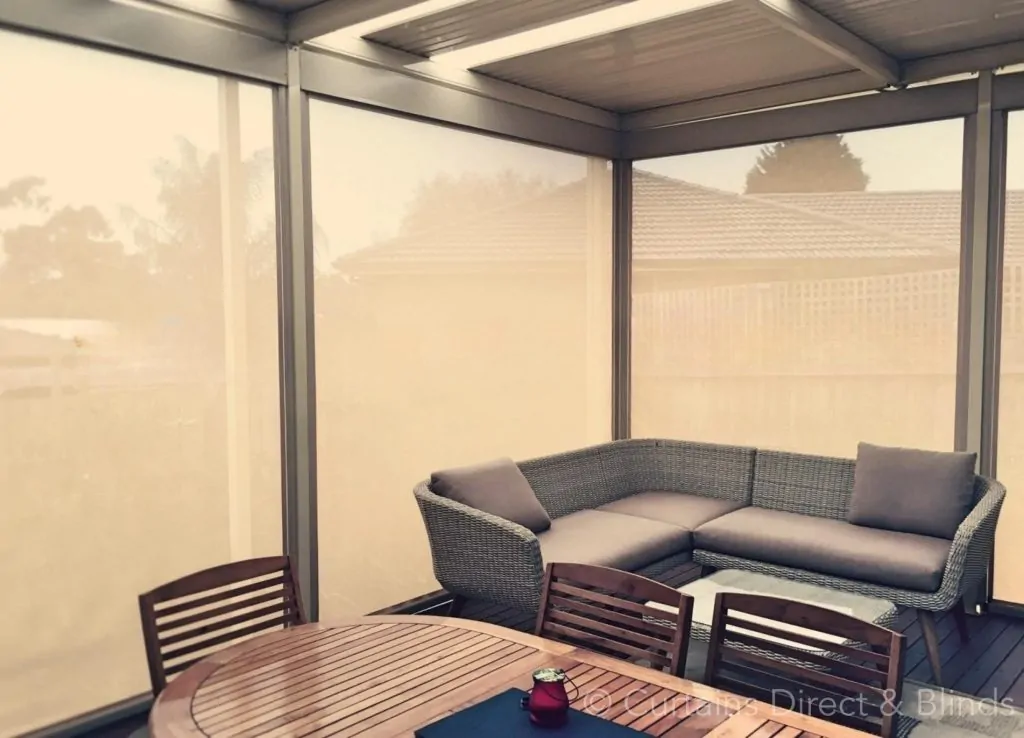
It may not be worth it when:
- The area is highly exposed to wind
- There is no suitable wall, fascia or structure for secure fixing
- The outdoor space is rarely used
- You want permanent rain or storm protection
- The budget only allows a very low-quality product
- The awning would block views, windows or doors when extended
- Body corporate, council or landlord approval is unlikely
- The main issue is side sun or privacy, not overhead shade
For example, a high-level apartment balcony can be very wind-exposed. Even if it receives strong sun, a retractable awning may not be suitable if the fixing points, approvals or wind conditions are not right. In that case, outdoor blinds or indoor blockout blinds may be a better solution.
How Sun Direction Affects Awning Value
Sun direction plays a major role in whether retractable awnings are worth it. In Australia, UV intensity is high across most regions and the sun angle varies significantly by season which means the direction your outdoor area faces has a direct impact on how useful an awning will be.
| Outdoor area direction | Awning value | Why |
| West-facing | High | Afternoon sun is harsh and uncomfortable |
| North-facing | Moderate to high | Useful for managing long daylight exposure |
| East-facing | Moderate | Helps with morning sun on breakfast patios |
| South-facing | Lower to moderate | May be less urgent unless glare is an issue |
| Exposed corner block | Depends | Wind exposure needs careful checking |
A west-facing patio often gets strong afternoon heat one of the most common complaints from Australian homeowners. A north-facing deck may benefit from shade through long daylight hours, especially in summer. An east-facing balcony may only need shade in the morning.
Do not rely only on compass direction. Nearby fences, neighbouring buildings, trees, rooflines and glass doors can all change how the sun affects the area.
Manual vs Motorised Retractable Awnings
The choice between manual and motorised should depend on size, budget and how often you will use the system.
Manual retractable awnings
Manual awnings are usually more affordable and work well for smaller areas. They may suit budget-conscious homeowners, smaller patios or courtyards, lower-use outdoor spaces and rental properties where a basic system is preferred.
The main consideration is effort. If the awning is large or used every day, winding it in and out manually may become inconvenient.
Motorised retractable awnings
Modern retractable awnings with motorised systems offer convenient operation, especially for larger installations or high-use outdoor areas. Many now include wind sensors, sun sensors and smart-home integration making them well suited to contemporary Australian homes where automated shading is already used indoors.
Motorised awnings are worth considering for larger patios, elderly homeowners, busy families, outdoor dining spaces and anyone who prefers remote or automated operation. They cost more upfront and may need power access, but convenience often determines how regularly the awning is actually used.
| User type | Better option |
| Budget-conscious homeowner | Manual |
| Large retractable awning for patio | Motorised |
| Elderly homeowner | Motorised |
| High-use outdoor dining area | Motorised |
| Rental property | Manual or simple motorised |
| Modern home with smart controls | Motorised with automation |
| Wind-exposed site | Professional assessment first |
Homeowners already using motorised blinds indoors may also prefer motorised awnings because both options make light and shade control easier to manage across the whole home.
Window Awnings Retractable: What Is the Difference?
Retractable awnings and window awnings are not the same, although both provide external shade.
A retractable awning is usually used over an outdoor living area creating overhead shade for a patio, deck, balcony or courtyard.
A window awning is fitted over or outside a window, with the specific purpose of reducing sun, glare and heat before they reach the glass. Window awnings can also be retractable. A retractable window awning allows you to extend shade over the glass when the sun is strong and retract it to allow more natural light when conditions change.
Use a retractable awning when the goal is to shade an outdoor entertaining space. Use a retractable window awning when the goal is to reduce heat and glare entering the room through the glass.
For homes where the main issue is sun hitting the glass rather than an exposed outdoor area, window awnings may be a more targeted and cost-effective solution.
For example, if a living room becomes hot because direct sun hits a large window, a window awning retractable or fixed can shade that glass effectively. But if the issue is a family deck that becomes unusable in summer, a retractable patio awning is the right product.
Retractable Awnings vs Outdoor Blinds, Pergolas and Shade Sails
A retractable awning is useful for overhead sun, but it may not solve every outdoor comfort issue.
| Option | Best for | Main limitation |
| Modern retractable awning | Flexible overhead shade | Must be retracted in strong weather |
| Retractable window awning | Reducing sun on windows | Does not cover a full patio |
| Outdoor blinds | Side sun, privacy and wind reduction | May not provide overhead shade |
| Pergola | Permanent outdoor structure | Higher cost and less flexibility |
| Shade sail | Budget-friendly shade | Less adjustable |
| Umbrella | Temporary movable shade | Limited coverage and stability |
| Indoor roller blinds | Interior glare and privacy | Does not stop sun before it reaches glass |
If the problem is low-angle side sun, an overhead awning may not help. Outdoor blinds or external screens may be better. If the problem is indoor glare, roller blinds or blockout blinds may be more suitable. If the problem is permanent weather coverage, a pergola or fixed structure may be a better fit.
Retractable awnings work best when the problem is overhead sun on an outdoor area and you want flexibility rather than a permanent solution.
What Should You Check Before Installation?
Before purchasing retractable awnings for sale online or through a supplier, have a professional confirm these details for your specific space. Getting the specification wrong can affect safety, performance and the awning’s ability to cover the area you actually want to shade.
Check:
- Wall or fascia strength and suitability for fixing
- Mounting height and awning pitch
- Projection distance required to cover the outdoor area
- Door and window clearance when the awning is extended
- Gutters, downpipes, outdoor lights and ceiling fans
- Wind exposure at the site
- Drainage direction
- Power access for motorised models
- Nearby trees and falling debris
- Body corporate, council or landlord approvals
- Whether the awning will block indoor natural light when extended
Frame material matters too. A metal retractable awning with a powder-coated aluminium frame offers better durability and resistance to UV, heat and moisture than lighter alternatives. Always ask about the frame construction and warranty before committing to a product.
Choosing the Right Size: From 2m to 6m Retractable Awnings
Awning size is one of the most important decisions in the installation process.

A 2m retractable awning suits a small balcony, compact courtyard or narrow window bay where the goal is targeted shade over a limited area. At this size, a manual system is often sufficient and installation is usually more straightforward.
A 6m retractable awning covers a large entertaining area a full-width deck, alfresco dining space or wide patio. At this size, motorised operation is strongly recommended because the weight and width of the awning make manual winding impractical for daily use.
For a large retractable awning for a patio, the projection distance is as important as the width. A wide awning that does not extend far enough may shade the wall but not the table and seating area where the family actually sits.
To determine the right size, measure the full width of the area to be shaded, the projection depth from the wall to the outer edge of the outdoor area, and the mounting height. A professional measure will confirm the correct specification before any order is placed.
How Much Maintenance Do Retractable Awnings Need?
Retractable awnings need basic care to keep them looking good and operating properly.
Maintenance may include:
- Removing leaves and debris regularly
- Letting wet fabric dry before leaving it retracted long-term
- Cleaning the fabric according to supplier instructions
- Checking brackets, fixings, arms and joints periodically
- Keeping branches clear of the awning
- Checking motor operation annually if motorised
- Avoiding harsh cleaning chemicals on the fabric
- Retracting the awning during unsuitable weather
Do not roll away wet fabric and leave it closed for extended periods moisture trapped in the fabric can lead to odours, staining or mould. Avoid scrubbing fabric aggressively; a mild, product-appropriate cleaning method is safer than using strong household cleaners.
If the awning makes unusual noises, moves unevenly or appears loose, stop using it and arrange professional advice. Small mechanical issues left unaddressed tend to become larger and more expensive repairs.
Common Mistakes to Avoid
Choosing only by price a cheap awning may look attractive upfront but may not suit a large or exposed area. Frame quality, fabric rating, warranty and installation strength all matter. A metal retractable awning with proper fixings will outperform a lightweight product even if the upfront price is higher.
Ignoring wind exposure awnings should not be treated as storm structures. If the outdoor area is exposed to strong wind, get professional advice before choosing the system. Check product specifications carefully before browsing retractable awnings for sale.
Expecting it to act like a permanent roof, a retractable awning provides flexible shade, not fixed weather protection.
Choosing too small a projection if the awning does not extend far enough, it may shade the wall but not the table, seating area or main outdoor space. This is a common issue with 2m retractable awnings purchased for spaces that need a 3m or 4m projection.
Forgetting about doors and gutters, sliding doors, outward-opening windows, downpipes, gutters, outdoor lights and ceiling fans can all affect correct installation.
Leaving it extended in poor weather always retract the awning during unsuitable weather and never rely on it for storm protection.
Leaving wet fabric retracted for too long allows the fabric to dry when possible before storing it for long periods.
Skipping approval checks apartments, townhouses, rental properties and commercial premises may require body corporate, landlord or council approval before installation.
Are Retractable Awnings Good for Rental Properties and Small Businesses?
Rental properties
An awning may add value when the outdoor area is a key feature of the property. A shaded courtyard or patio can make the property more appealing to tenants.
However, landlords need to consider upfront cost, tenant use and maintenance responsibility, risk of misuse, approval requirements and product durability. For some rental properties, simpler external shading, retractable window awnings, outdoor blinds or indoor blinds may be easier to maintain and replace.
Small businesses
A modern retractable awning may help a café, clinic, salon or shopfront by improving shade and street appeal. It can make outdoor seating or waiting areas more comfortable and may reduce direct sun on the frontage.
Before installing, small businesses should check council rules, signage restrictions, wind exposure, footpath clearance, building fixing points and maintenance access. For commercial use, a metal retractable awning with a commercial-grade frame is usually the more appropriate choice because the awning will be used far more frequently than a residential installation.
Final Verdict: Are Retractable Awnings Worth It for Australian Homes?
So, are retractable awnings worth it for Australian homes? The answer is yes when the outdoor area is sunny, used often and suitable for safe installation. In Australia’s climate, where west-facing outdoor areas can become genuinely unusable in summer, a well-specified retractable awning can make a significant difference to daily comfort and lifestyle.
It is a good choice when you want flexible shade rather than a fixed roof, and when the outdoor space is already valued by the household.
It may not be worth it when the space is rarely used, highly wind-exposed or unsuitable for secure fixing. It may also be the wrong solution if you need permanent rain protection, side privacy or indoor light control.
Before committing, ask:
- Do we use this outdoor area often?
- Is the sun the main reason we avoid space?
- Is the area suitable for installation?
- Will the awning projection cover the area we actually use?
- Are we willing to maintain and retract it properly?
- Would a retractable window awning, outdoor blind or indoor blind solve the problem better?
If the answers point toward regular use and strong sun exposure, a retractable awning can be a worthwhile investment for an Australian home.
Get the Right Outdoor Shade Solution for Your Space
For modern retractable awnings, retractable window awnings and custom outdoor shading solutions across Melbourne, book a free measure and quote with Curtains Direct. A specialist will assess your outdoor space and help you compare sizes, frame materials and motorised options so you choose the right product before committing to a purchase.


